Document Approvals for AI era

Document approval workflows have evolved far beyond simple linear processes. Modern organizations need sophisticated approval systems that can adapt to complex business rules, handle multiple stakeholders, and provide the flexibility required for diverse operational scenarios. Docflo.ai's advanced approval system transforms how businesses manage document approvals, offering unprecedented control, automation, and intelligence.
The challenge isn't just about getting incoming documents approved—it's about creating approval workflows that are both rigorous enough for compliance and flexible enough to handle the nuanced requirements of modern business operations. Whether you're processing invoices, contracts, purchase orders, or any other business-critical documents, the approval process should enhance efficiency rather than create bottlenecks.
Traditional approval systems were built for simpler times—linear workflows where documents moved from person A to person B in predetermined sequences. But modern businesses operate with matrix organizations, cross-functional teams, and complex decision-making structures that require more sophisticated approaches.
Beyond Linear Workflows
Today's approval needs are multidimensional:
- Multiple stakeholders with different areas of expertise and authority
- Conditional approvals based on document content, amounts, or other criteria
- Parallel processing to eliminate unnecessary delays
One of the most powerful features of Docflo.ai's approval system is the ability to define multiple approvers for any document type or approval scenario. This isn't just about adding more people to the process—it's about creating intelligent approval networks that ensure the right expertise is applied at the right time.
Flexible Approver Assignment
Imagine you are able to send documents to approval based on business data extracted from it, for example:
- Invoices over $10,000 require CFO approval
- Receipts related to specific areas require business unit manager approval
- Vendor contracts of high volumes require both legal and procurement approval
- International transactions need compliance team review
The "all vs. at least one" approval requirement is where Docflo.ai's system shows its sophisticated understanding of business processes. Different scenarios require different approval logic, and having the flexibility to configure this at a granular level transforms approval workflow effectiveness.
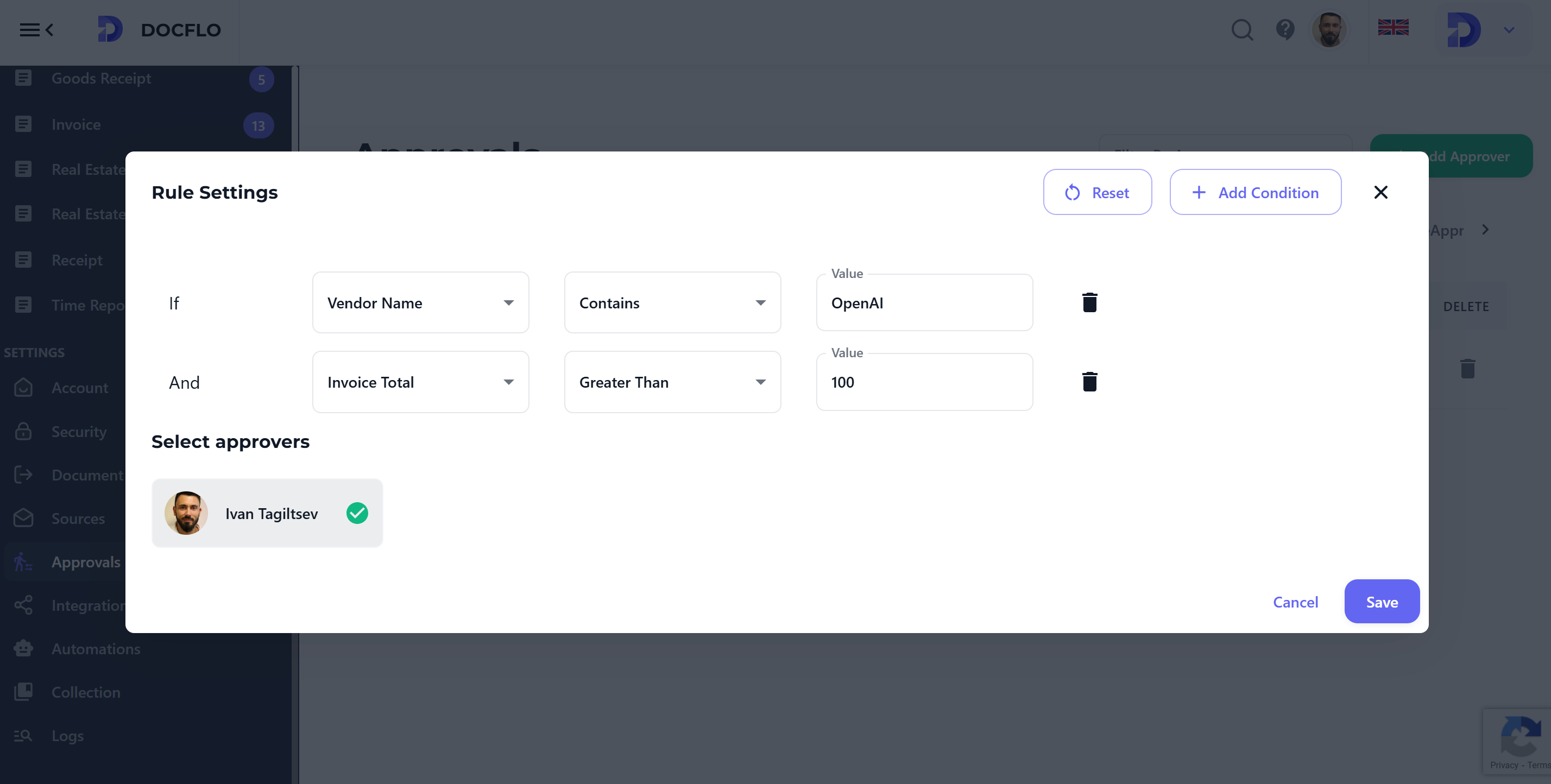
Field-Based Approval Rules
Any field in any document type can be combined into approval path configuration, combined with different conditions. For example:
Advanced Strategy Examples
Seasonal Adjustments: Approval thresholds that adapt to business cycles:
- Higher thresholds during peak seasons
- Tighter controls during budget closure periods
- Flexible requirements for emergency situations
Project-Based Approvals: Dynamic approval based on project context:
- Project managers for project-related expenses
- Client approvals for client-specific work
- Cross-functional teams for interdisciplinary projects
Performance-Based Logic: Approval requirements that consider historical performance:
- Trusted vendors get streamlined approval
- New suppliers require enhanced verification
- Poor performers get additional scrutiny
Controlling Notification Intensity
Effective approval systems require smart communication strategies. Too many notifications create noise and reduce responsiveness; too few notifications create delays and missed deadlines. Docflo.ai's notification system provides granular control over communication intensity, ensuring approvers stay informed without being overwhelmed.
Personalized Approval Views: Role-Based Document Access
The principle of showing approvers only documents that require their attention while giving administrators comprehensive visibility creates an efficient and secure approval environment. This role-based approach reduces cognitive load for approvers while maintaining complete oversight capabilities for administrators.
We provide the tools for administrators to analyze document approval stages and time metrics for approvals per user.